
Reducing Waste by Optimizing Your Homes Systems
Homeowners often consider waste reduction in terms of daily habits such as recycling, water conservation, and composting. While valuable, these actions only scratch the surface of a household’s environmental footprint. Major resource drains are hidden within your home’s structure, like behind walls, inside utility spaces, and under floors. Unoptimized or aging home infrastructure quietly wastes resources constantly. This inefficiency inflates utility bills, strains municipal systems, consumes fossil fuels, and leads to premature equipment failures, contributing to landfill waste. Transforming your home for efficiency and sustainability involves shifting focus from individual habits to entire home systems. By viewing your house as an interconnected ecosystem, you can audit and optimize each core component effectively.
Calibrate and Seal Your Ductwork to Prevent Conditioned Air Loss

The network of ducts in your crawlspaces, attic, and walls acts as the circulatory system for your climate control. In a typical American home, ductwork loses about 20 to 30 percent of its conditioned air to unconditioned spaces due to loose connections, failing tape, and cracks. When heated or cooled air leaks into the attic before reaching the living room, your mechanical units have to run longer to maintain the desired thermostat setting, causing significant unnecessary energy wear.
To combat this silent resource drain, you must systematically audit and seal your distribution system:
- Locate accessible ducts in your basement, crawlspace, or attic and inspect the joints for visible gaps or dust streaks, which indicate air escaping under pressure.
- Avoid standard fabric duct tape, which degrades rapidly; instead, apply high-quality mastic sealant or aluminum foil tape directly over the seams.
- Insulate ducts that run through unconditioned zones like garages or attics to ensure air maintains its temperature during transit.
Beyond DIY sealing, pay attention to how your system breathes. Airflow imbalances can cause pressure differences between rooms, forcing conditioned air out through tiny exterior cracks. Uneven temperatures across different floors, whistling noises from vents, or sudden spikes in energy usage may indicate a deeper restriction. Catching these minor airflow imbalances or component stresses early can prevent the need for emergency HVAC repairs, keeping your system operational when needed most.
Upgrade to Variable-Speed Units to Stop Energy Cycling Waste
Traditional heating and cooling equipment operates on a binary principle: it is either off or running at 100 percent capacity. This design causes short-cycling, where the system quickly satisfies the thermostat with a wave of conditioned air and then shuts down. The frequent starting and stopping waste electricity, as electric motors draw the most current during startup, and it accelerates mechanical wear, reducing the equipment’s lifespan.
Modern climate engineering solves this issue through variable-speed technology, often driven by inverter compressors:
- Variable-speed motors can adjust their output precisely, running anywhere from 40 to 100 percent capacity depending on real-time demands.
- By running continuously at a lower, quieter speed, these units maintain a perfectly steady indoor temperature without energy-intensive spikes.
- Continuous operation improves indoor air quality and humidity control, because air is consistently pulled through filtration media.
When your current climate systems reach the end of their lifespan, replacing them with a fixed-output model results in another decade of energy waste. Investing in a modern air conditioner installation with smart variable capacity can reduce your seasonal cooling consumption by up to half, significantly lowering your home’s carbon footprint.
Modernize Exterior Wall Barriers to Eliminate Drafts and Radiated Heat
Your home’s exterior walls are the largest surface area exposed to the elements, making them a primary vector for thermal transfer. In summer, radiant heat from the sun bakes your walls, driving warmth inward. In winter, interior heat migrates outward through thermal bridging, where components like wood studs conduct heat faster than surrounding air pockets.
Optimizing this boundary involves upgrading the protective layers that shield your structural framing:
- High-performance house wraps act as weather-resistant barriers, stopping bulk water and wind while allowing interior moisture vapor to escape.
- Exterior rigid foam insulation boards can be installed over the plywood sheathing, effectively breaking the thermal bridge created by wall studs.
- Modern, engineered materials resist warping, cracking, and insect damage, meaning they maintain their sealing properties for decades without degrading.
Failing exterior barriers can cause cold drafts near electrical outlets, hot interior drywall in July, or mysterious moisture spots in your home. When your home’s exterior armor fails, patching spots only delays the inevitable. Investing in comprehensive siding installation with integrated insulation creates a continuous thermal blanket around your home, preventing climate loss and reducing the workload on your heating and cooling equipment.
Optimize Perimeter Openings and Large Structural Transitions

While walls form the majority of a home’s envelope, the garage door is typically the largest structural opening. Garages are often uninsulated since they are seen as utility spaces. However, if your garage is attached to your home, an unsealed perimeter acts as a thermal bridge, transferring extreme temperatures to the shared interior walls and floors of your living space.
To optimize these massive structural transitions, implement a strict sealing protocol:
- Examine the bottom rubber gasket of your overhead doors to ensure it compresses completely flat against the concrete floor when closed, leaving no visible light.
- Install heavy-duty vinyl weatherstripping along the top and side jambs to block wind-driven drafts from infiltrating the space.
- Choose doors featuring polyurethane foam injection technology, which offers superior thermal resistance compared to hollow steel or wood panels.
Maintaining this structural transition requires keeping tracks balanced and seals aligned. Misaligned tracks cause panels to pull away from the weatherstripping, creating gaps that allow air and rodents to enter. Relying on professional garage door service ensures that the springs, tracks, and sensors are calibrated perfectly to maintain an airtight, secure seal.
Transition to Demand-Based Water Heating Systems
Water heating is the second-largest energy expense in the average household, making up about 18 percent of utility costs. Traditional water heaters use storage tanks holding 40 to 60 gallons at a high temperature. Heat naturally escapes through tank walls, requiring the unit to reheat the water periodically, even when not in use. This standby heat loss is pure energy waste.
Transitioning to a demand-based or high-efficiency system eliminates this cycle entirely:
- Tankless water heaters use high-output burners or elements to heat water instantly as it flows through the unit, consuming zero energy when the taps are closed.
- Hybrid heat pump models pull ambient heat out of the surrounding air and pump it into the water, operating up to three times more efficiently than standard electric tanks.
- Point-of-use units can be placed directly under distant bathroom sinks, eliminating the water waste that occurs while waiting for hot water to travel across the house.
Assessing your hot water heaters based on household usage patterns helps you align supply with demand. If your household has high-volume, simultaneous water use or long periods of inactivity, switching from legacy storage tanks can prevent significant standby loss each year.
Implement Real-Time Leak Detection and Flow Calibration
According to environmental data, the average household loses more than 10,000 gallons of water annually due to hidden leaks. These are not obvious floods but rather slow issues like an incompletely sealed toilet flapper, a hairline pipe fracture behind a wall, or a dripping valve in a crawlspace. Over time, these micro-leaks rot structural wood, encourage mold growth, and waste thousands of gallons of treated municipal water.
Mitigating this hidden fluid waste requires bringing modern diagnostics into your plumbing system:
- Install smart, whole-home diagnostic monitors directly onto your main incoming water line to track micro-pressure drops and flag unusual, continuous flows.
- Replace standard showerheads with aerated, low-flow models that mix air into the stream, maintaining satisfying pressure while cutting water volume by 30 percent or more.
- Perform routine dye tests in your toilet tanks to verify that water isn’t silently escaping into the drain between flushes.
While many low-flow upgrades can be handled over a weekend, installing automated main shutoff systems requires professional precision. Partnering with a licensed plumbing company ensures comprehensive pressure diagnostics, keeping your home leak-free from the water main to the highest fixture.
Transition to Weather-Based, Smart-Zone Watering Systems

Outdoor water use is a significant part of residential consumption, with estimates indicating up to half of it is wasted through evaporation, wind, or poor system design. Traditional automated irrigation systems use mechanical clocks that run for set durations, ignoring recent rain or soil saturation. This causes oversaturation, fungal plant diseases, and excess treated water entering municipal storm drains.
Optimizing your landscape watering involves shifting to data-driven delivery:
- Smart irrigation controllers connect to local weather stations via Wi-Fi, automatically skipping scheduled waterings if rain is in the forecast or if humidity levels are high.
- Drip irrigation lines deliver water directly to the root zones of shrubs and flowerbeds, minimizing the evaporation loss common with overhead sprayers.
- Soil moisture sensors buried in turf zones communicate real-time ground saturation data, preventing watering cycles until the soil actually dries out.
Calibrating an outdoor distribution network requires zoning based on soil type, sun exposure, and plant species. Hiring a qualified irrigation contractor to audit your layout ensures sprinkler heads are positioned for matched precipitation rates, preventing overspray onto sidewalks and making sure every drop efficiently serves your landscape.
Optimize Roof Solar Reflectance and Attic Airflow Deflectors
Your roof is your home’s first defense against the elements, absorbing direct solar radiation. Dark asphalt shingles act like thermal sponges, reaching temperatures of 150 degrees Fahrenheit on hot summer afternoons. This radiant energy heats the attic space beneath the roof deck. If the heat cannot escape, it migrates through your ceiling insulation, warming your living space and forcing cooling systems to overwork.
To turn your roof into an active component of your energy conservation strategy, optimize both its surface and its ventilation:
- Cool-roof shingles or reflective metal panels are engineered with specialized granules that reflect solar radiation back into the atmosphere rather than absorbing it.
- Soffit vents paired with continuous ridge vents create a natural convection current, drawing cool air in at the eaves and pushing superheated attic air out through the peak.
- Attic baffles or insulation deflectors keep your fiberglass or cellulose insulation from blocking the soffit openings, ensuring uninterrupted airflow.
Managing the thermodynamics of your roof requires structural knowledge. Consulting an experienced roofing contractor lets you evaluate attic ventilation and select reflective materials suited to your climate, turning your roof into a shield that sheds heat.
Organize the Home into Smart Electrical Circuits with Load Management
Even when turned off, appliances often still consume power. This, known as vampire power draw or standby load, can account for up to 10% of an average home’s electricity usage. Devices like televisions, microwaves, computer chargers, and smart speakers constantly siphon energy to remain ready.
To gain complete control over your electrical consumption, you must modernize your distribution panels and circuits:
- Smart electrical panels and smart breakers track electricity consumption down to the individual circuit level, sending real-time usage data directly to your smartphone.
- Programmable smart relays can be scheduled to cut power completely to entertainment centers or home offices during overnight hours, wiping out standby loads entirely.
- Energy monitoring systems help identify failing appliances by flagging unusual power spikes or prolonged draws from older motors.
Upgrading your electrical distribution infrastructure is not a DIY task. Enlisting certified residential electricians ensures your home can safely accommodate modern energy management systems, smart panels, and electric vehicle charging circuits without overloading your existing service or creating fire hazards.
Install Centralized Filtration to Eradicate Single-Use Plastic and Micro-Wastage
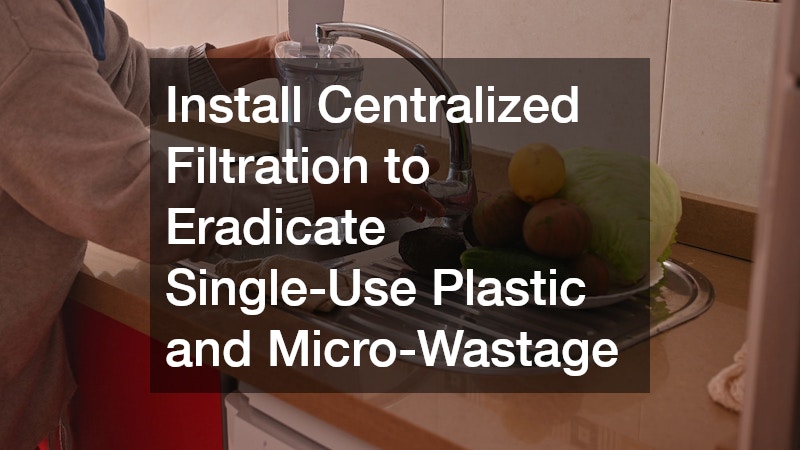
Water waste occurs not only at the tap but also through consumer supply chains when home water quality is poor. If tap water tastes of chlorine, minerals, or sulfur, many default to buying single-use plastic bottles or using small countertop filtration pitchers. These solutions generate substantial plastic waste, require frequent cartridge replacements that end up in landfills, and provide no protection for home infrastructure.
The sustainable solution is to treat your water at its point of entry:
- Whole-house filtration systems remove sediments, chlorine, heavy metals, and hard minerals before the water ever enters your internal plumbing lines.
- Eliminating hard minerals prevents scale buildup inside your pipes, dishwashers, and washing machines, which keeps these appliances running at peak efficiency for years longer.
- High-flow, multi-stage systems provide pristine drinking water from every single faucet in the house, eliminating the need for bottled water entirely.
When choosing a system, look for models with high-efficiency backwashing valves that reduce water use in the self-cleaning cycle. Integrating a centralized water filtration system into your main utility room protects your plumbing, reduces appliance waste, and improves consumption habits.
Optimizing your home’s infrastructure shifts from reactive maintenance to proactive environmental stewardship. Viewing your house as a unified system reveals how energy and water flow through your space. A sealed ductwork system reduces air conditioner strain; a well-insulated wall preserves water heater work; a smart electrical panel prevents wasted power during sleep.
Do not feel overwhelmed by upgrading everything at once. Sustainability is achieved through steady improvements. Start by auditing critical resource paths—whether inspecting attic ventilation, testing for hidden water leaks, or checking insulation levels. Systematically calibrating these systems builds a resilient, efficient home that protects resources and reduces operating costs.